
Steel Mesh for Block Work: A Simple Guide to Ladder Mesh
What steel mesh to use in block walls, where to place it and how it stops cracks. A simple guide to block ladder mesh for contractors in Saudi Arabia.
Perfect Steel Team
Author
Cracks in block walls are one of the most common complaints on new buildings. Many of them can be prevented with a cheap, simple product laid while the wall goes up: steel mesh in the mortar joints. This guide explains what block work mesh is, why it matters, and how to install it correctly.
What is steel mesh for block work?
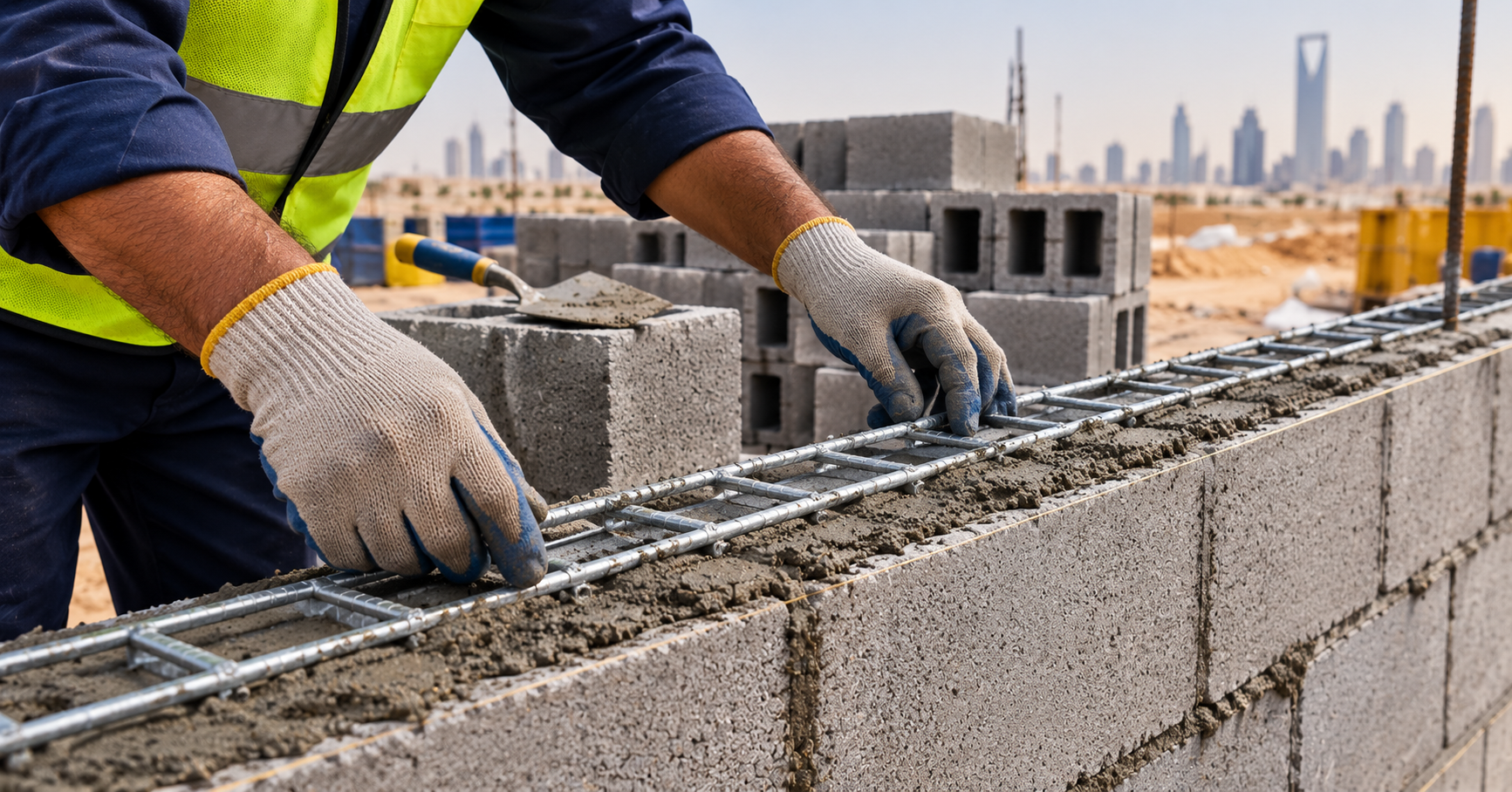
Block work mesh, usually called block ladder mesh or joint reinforcement, is a steel reinforcement made of two parallel wires joined by cross wires, so it looks like a ladder lying flat. It is laid in the horizontal mortar joints between courses of concrete blocks.
Once the mortar sets, the mesh is locked inside the wall and ties the blocks together along the whole length.
Why use mesh in block walls?
Block walls move. Concrete blocks and mortar shrink as they dry, buildings settle, and in Saudi Arabia walls heat and cool a lot between day and night. Without reinforcement, that movement shows up as cracks, often running from the corners of doors and windows.
Ladder mesh helps by:
- Controlling shrinkage cracks. The steel holds the wall together so small movements spread out instead of opening one large crack.
- Tying the wall together. Long walls behave as one unit rather than separate blocks.
- Strengthening around openings. Mesh above and below doors and windows reduces cracking at the corners.
- Connecting walls. Mesh can tie intersecting walls and walls to columns.
Ladder mesh or expanded metal?
Both are used in block work, but for different jobs:
| Product | Where it goes | Main job |
|---|---|---|
| Block ladder mesh | Inside the horizontal mortar joints | Reinforces the wall itself |
| Expanded metal / plaster mesh | Over joints on the wall surface before plastering | Stops plaster cracking where block meets concrete |
Many projects use both: ladder mesh in the joints while building, and plaster mesh at block-to-column joints before plastering.
How to install block ladder mesh
- Choose the right width. The mesh should be a little narrower than the block, so both wires sit in the mortar with cover on each side. Tell your supplier the block width (for example 10, 15 or 20 cm).
- Lay a bed of mortar on the course of blocks.
- Place the mesh in the centre of the mortar bed, with the wires running along the wall.
- Overlap the lengths. Where two pieces meet, overlap them so the reinforcement is continuous. Follow the project engineer's specification for overlap length.
- Cover it fully. Lay mortar over the mesh before placing the next course, so no steel is exposed.
- Repeat at regular intervals. Mesh is commonly placed every two or three courses, and in the courses directly above and below openings. Your engineer or the project drawings set the exact spacing.
Common mistakes
- Leaving the mesh out to save time. It costs little compared with repairing cracked plaster later.
- Mesh too wide for the block, so the wires sit at the edge with no mortar cover and rust.
- No overlap at joints between lengths, which leaves weak points.
- Skipping mesh around openings, where cracks are most likely.
Frequently asked questions
How often should mesh be placed in a block wall? It is usually placed every two or three courses and next to openings, but always follow the project drawings and the engineer's specification.
Do I still need plaster mesh if I use ladder mesh? Often yes. Ladder mesh strengthens the wall; plaster mesh stops cracks in the plaster where blocks meet columns and beams.
What length does block ladder mesh come in? Our block ladder mesh comes in 3 m lengths.
Buy block work mesh in Jeddah
Perfect Steel supplies block ladder mesh, expanded metal and the rest of your blockwork and plastering materials from our Jeddah warehouse, with delivery across Saudi Arabia. Send the block width and quantity on WhatsApp at +966 546 720 678 and we will confirm the right size and price.
Tags
Related Articles

How to Choose a Steel Supplier in Jeddah: 7 Things to Check
Buying steel in Jeddah? Use these 7 checks on standards, stock, cutting, delivery and pricing to pick a reliable steel supplier for your project.

Roof Waterproofing Before the Rain: A Simple Guide for Jeddah
Get your roof ready before the rain. A simple guide to roof waterproofing in Jeddah: checks, primer, bitumen membrane and the mistakes to avoid.
MDF vs Plywood: Which Board for Kitchens, Wardrobes and Site Work?
MDF, melamine MDF or plywood? A simple guide to choosing the right board for wardrobes, kitchens, furniture and formwork, from Perfect Steel in Jeddah.